
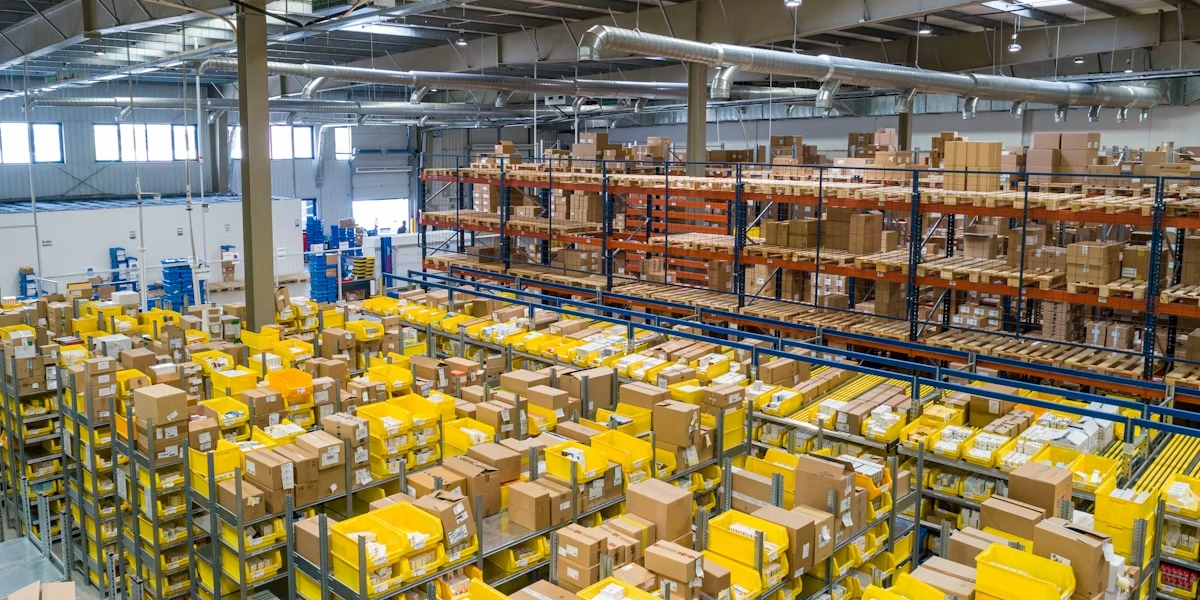
Wholesale is one of the most stable, scalable business models on Amazon — you sell established, already-selling brands instead of gambling on a new private-label product. But the entire model hinges on one thing: finding legitimate, reliable wholesale suppliers. This guide consolidates everything you need — from where to search, to how to vet a supplier, to negotiating terms and avoiding scams — into a single, up-to-date resource.
1. What Wholesale on Amazon FBA Actually Means
In the wholesale model, you buy products in bulk directly from manufacturers, distributors, or authorized resellers at a discounted rate, then resell them on Amazon (often via FBA for fulfillment) at market price. You are not creating a new product or brand — you’re sourcing brands that already have proven demand and existing Amazon sales history.
Key traits of the model:
- Licensing: You need reseller/business licenses and often a resale certificate.
- MOQs: Suppliers usually require minimum order quantities.
- Margins: Thinner than private label, but demand is more predictable.
- Competition: You’re competing with other sellers on the same listing (unless you have brand authorization or exclusivity).
2. Where to Find Wholesale Suppliers
A. Manufacturer & Brand Websites
Many brands list authorized distributors or offer a “wholesale inquiries” / “become a dealer” page. This is the most direct, scam-free route — search the brand name plus terms like “wholesale account,” “become a dealer,” or “distributor application.”
B. Wholesale Directories
Verified directories aggregate legitimate suppliers and filter out most scammers:
- SaleHoo
- Worldwide Brands
- Wholesale Central
- ThomasNet (US manufacturers)
- Alibaba (for suppliers willing to do domestic-style wholesale, though more common for private label)
C. Trade Shows
In-person or virtual trade shows remain one of the best ways to build direct relationships with brand owners and regional distributors:
- ASD Market Week
- Global Sources trade fairs
- Industry-specific shows (e.g., ECRM for consumer goods, MAGIC for apparel)
D. Google Search Operators
Targeted search strings often surface suppliers directories miss:
- “” + “wholesale distributor”
- “[brand name]” + “become a dealer”
- “” + “wholesale account application”
E. Existing Retail Relationships
Cold-emailing or calling local distributors, regional wholesalers, and even brand sales reps directly is underused but highly effective — many will work with smaller sellers who reach out professionally.
F. Amazon’s Own Data
Use tools like Jungle Scout, Helium 10, or Keepa to identify products with consistent sales history and multiple sellers (a sign of a healthy wholesale opportunity), then trace the brand back to its distribution network.
3. How to Vet a Wholesale Supplier
Before committing, verify legitimacy across these checkpoints:
- Business registration — confirm the company is legally registered (check state/country business registries).
- Resale certificate exchange — legitimate wholesalers will ask for yours and provide their own documentation.
- References — a real supplier can connect you with other resellers or provide trade references.
- Physical footprint — check for a real physical address and working phone line, not just a contact form.
- Terms in writing — confirm MOQs, pricing tiers, and payment terms before any transaction.
- Red flags — prices far below market rate, pressure to pay immediately via wire transfer only, no verifiable business history, or refusal to provide invoices.
4. Getting Approved as a Reseller
Many brands gate their wholesale program behind an approval process. To improve your odds:
- Business presence: present yourself as a registered business, not an individual (LLC or equivalent).
- Professional storefront: have a professional website or Amazon storefront ready to show.
- Transparency: be upfront that you plan to sell on Amazon — some brands restrict this, so ask before getting shut down later.
- Start small: begin with a smaller, reasonable order to build trust before requesting better terms.
5. Negotiating Terms
Once approved, negotiate on:
- Price breaks: at volume tiers (e.g., better unit price at 100+, 500+ units).
- Payment terms: net-30 or net-60 once trust is established, instead of prepayment.
- Shipping/freight: arrangements and responsibility.
- Return/defect policies: clarified and documented in writing.
6. Common Mistakes to Avoid
- Sourcing from unauthorized “wholesale” listings on Alibaba claiming to sell branded goods (usually counterfeit or grey-market).
- Skipping the resale certificate step, which can flag your Amazon account for authenticity complaints.
- Ignoring Amazon gating/restrictions — some brands and categories require approval before you can list, even with a legitimate invoice.
- Over-ordering before testing sell-through velocity.
7. Tools That Help the Wholesale Sourcing Process
| Tool | Purpose |
| Jungle Scout / Helium 10 | Product & sales-history research |
| Keepa | Price and sales-rank history |
| SaleHoo / Worldwide Brands | Verified supplier directories |
| Google Sheets / Airtable | Tracking supplier outreach and terms |
| Amazon Seller Central | Checking category/brand gating requirements |
Final Takeaway
Finding wholesale suppliers for Amazon FBA is a relationship-driven process, not a one-click sourcing task. The sellers who succeed long-term are the ones who build direct, verified relationships with brands and distributors — rather than relying only on marketplaces where authenticity is hard to confirm. Start with manufacturer outreach and verified directories, vet thoroughly, and scale order sizes only after proving sell-through.